The Joyful Mysteries meditate on the early life of Christ — from the moment of the Annunciation through the childhood years in Nazareth. They invite us to enter the mystery of God made flesh, through the eyes of Mary.
The Joyful Mysteries are the first set of the Rosary, five events from the early life of Christ: the Annunciation, the Visitation, the Nativity, the Presentation, and the Finding in the Temple. Catholics pray them on Mondays and Saturdays, meditating on the Incarnation and Christ's hidden years.
✦ Traditionally prayed on Monday and Saturday
Also prayed on Sundays during Advent and the Christmas season, in place of the Glorious Mysteries. For praying the Rosary on these days in particular, see the Monday Rosary and the Saturday Rosary.
◆ When to Pray the Joyful Mysteries
Standard days
Monday and Saturday, year-round
Advent Sundays
The Joyful Mysteries replace the Glorious Mysteries on all Sundays of Advent, aligning the Incarnation cycle with Advent’s orientation toward the coming of Christ
Christmas season
Sundays from Christmas through the Baptism of the Lord — keeping the Incarnation mysteries alive through the full Christmas octave
Marian feasts
Especially fitting on the Annunciation (25 March), the Visitation (31 May), and the Nativity of Mary (8 September)
Schedule authority
John Paul II, Rosarium Virginis Mariae §38 (2002); long-standing Dominican tradition prior to 2002
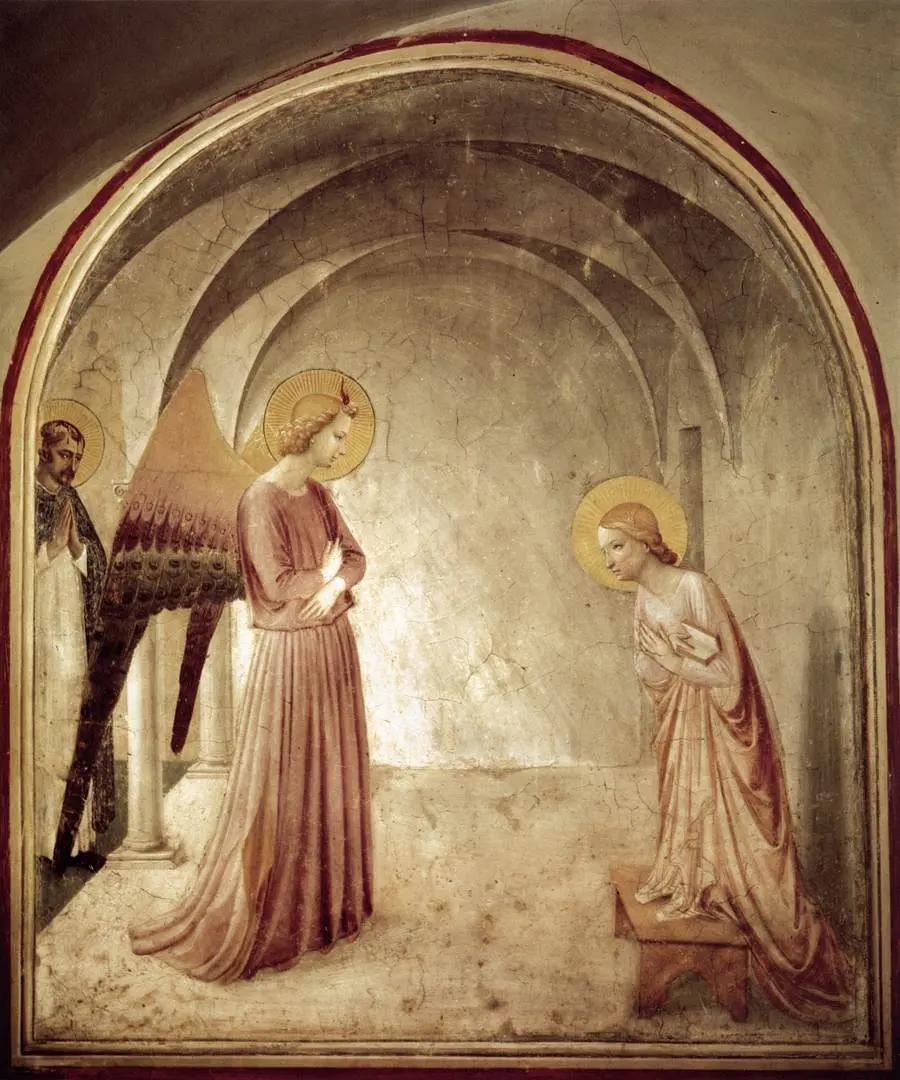
Fra Angelico, The Annunciation, c. 1440 to 1442. Convent of San Marco, Florence.
In the sixth month, the angel Gabriel was sent from God to a town of Galilee called Nazareth, to a virgin betrothed to a man named Joseph, of the house of David, and the virgin's name was Mary. Luke 1:26-27
God chooses a young woman in an obscure town in Galilee to bear His Son. The Annunciation is the moment the eternal enters time. Mary's fiat — "Behold the handmaid of the Lord; be it done to me according to thy word" (Luke 1:38) — is the hinge of salvation history. The fruit is humility: she did not grasp for what was given, but received it in openness and trust. Note that the first words of the Hail Mary — "Hail, full of grace, the Lord is with thee" — are Gabriel's own greeting to Mary at this precise moment.
Why Humility?
Humility flows from the Annunciation because the mystery is structurally the reversal of the Fall. Eve grasped what was not offered — equality with God (Genesis 3:5). Mary received what she did not reach for. Irenaeus of Lyons wrote in 180 AD: “The knot of Eve’s disobedience was untied through Mary’s obedience” (Adversus Haereses 3.22.4). Augustine adds that the Incarnation is itself the supreme act of divine humility — God emptying himself into a womb (Philippians 2:7). Mary’s single word, fiat, is the precise opposite of Eve’s act of grasping. The virtue we seek is the disposition to receive from God rather than to seize — the opening that makes all grace possible.
Sources: Irenaeus, Adversus Haereses 3.22.4 · Augustine, De Sancta Virginitate §31 · Philippians 2:5–8 · Thomas Aquinas, ST II–II, Q. 161
“The whole of salvation history, in some sense the entire history of the world, has led up to this greeting.” John Paul II, Rosarium Virginis Mariae §20
Sacred site: Basilica of the Annunciation, Nazareth — built over the traditional site of Mary’s house. Crusader church rebuilt by Franciscans in 1730, modernised 1969. An octagonal shrine marks the spot where Gabriel appeared.
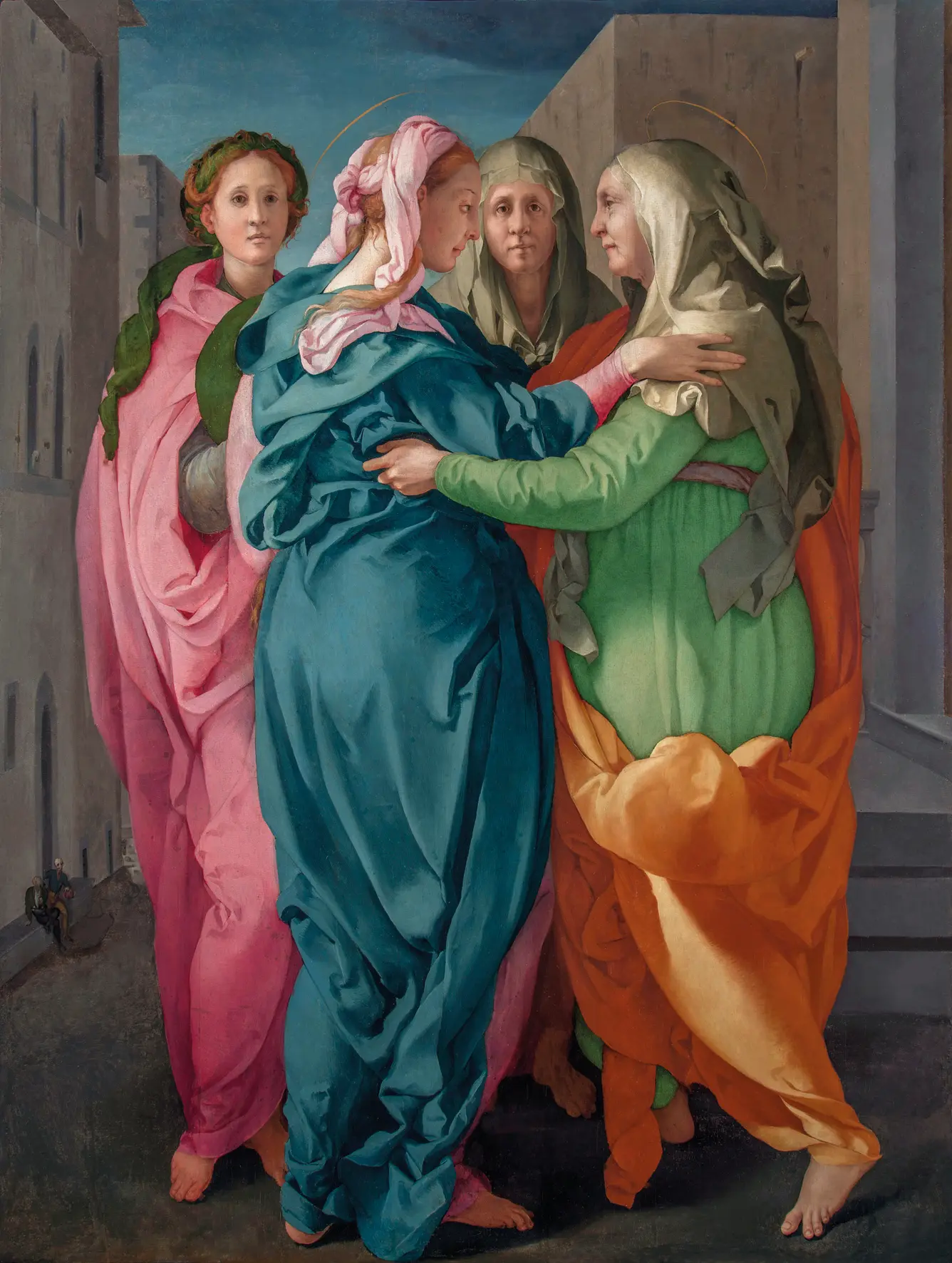
During those days Mary set out and traveled to the hill country in haste to a town of Judah, where she entered the house of Zechariah and greeted Elizabeth. When Elizabeth heard Mary's greeting, the infant leaped in her womb, and Elizabeth, filled with the holy Spirit, cried out in a loud voice and said, "Blessed art thou among women, and blessed is the fruit of your womb." Luke 1:39-42
Carrying Christ within her, Mary travels in haste to serve her elderly cousin Elizabeth, who is six months pregnant with John the Baptist. The infant John leaps at the presence of the Lord. Elizabeth is filled with the Holy Spirit; her words — "Blessed art thou among women" — become the second scriptural half of the Hail Mary. Mary's response is the Magnificat. The fruit is love of neighbor: she who has received the greatest gift sets out immediately to serve.
Why Love of Neighbor?
Love of Neighbor flows from the Visitation because the mystery shows charity’s interior logic: the one who has received most gives most freely. Mary has just been given the Word of God within her womb — and the very next verse is “Mary rising up in those days, went into the hill country with haste” (Luke 1:39). The Greek is spoude — urgency. She does not stay to contemplate her own gift but immediately goes to serve her elderly cousin. Thomas Aquinas teaches that love of God and love of neighbor are inseparable — not two loves but one love with two objects (ST II–II, Q. 25). The Visitation enacts this: Mary’s love of God, bearing Christ within, immediately expresses itself as service. Gift becomes service; grace becomes charity.
Sources: Luke 1:39 (Greek: spoude) · Thomas Aquinas, ST II–II, Q. 25 · John Paul II, Rosarium Virginis Mariae §20
“Exultation is the keynote of the encounter with Elizabeth, where the sound of Mary’s voice and the presence of Christ in her womb cause John to ‘leap for joy’.” John Paul II, Rosarium Virginis Mariae §20
Sacred site: Church of the Visitation, Ein Karem — built over the traditional home of Elizabeth and Zechariah, 8 km west of Jerusalem. Completed 1955 by architect Antonio Barluzzi.
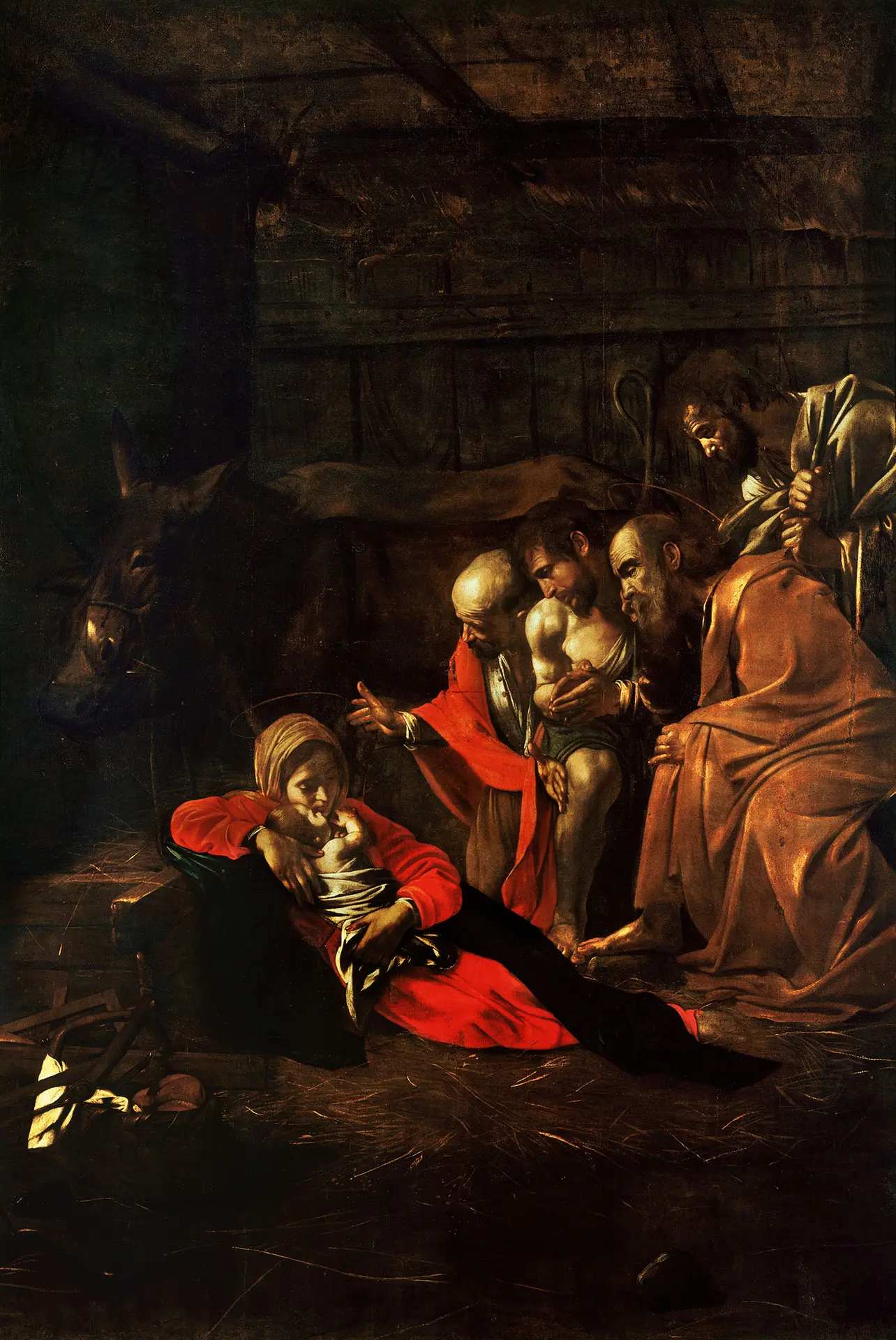
While they were there, the time came for her to have her child, and she gave birth to her firstborn son. She wrapped him in swaddling clothes and laid him in a manger, because there was no room for them in the inn. Luke 2:6-7
The Son of God is born in a stable. There is no room. The shepherds — the poor and overlooked — are the first to hear the news from angels who sing glory to God in the heights. The Lord of the universe lies in a feeding trough. The Nativity teaches that God does not come in earthly power and glory but in vulnerability and poverty. The fruit is detachment — interior freedom from the world's measure of greatness, holding lightly to what passes and trusting that what God gives is enough.
Why Detachment?
Detachment flows from the Nativity because the mystery is kenosis made material. Paul writes that Christ “emptied himself, taking the form of a servant” (Philippians 2:7) — the Nativity is that self-emptying made flesh. The Son of God is born owning nothing, laid in a manger, “because there was no room for them in the inn” (Luke 2:7); the poorest in Judea, the shepherds, hear the news first. Yet the point is not destitution but freedom: “being rich he became poor, for your sakes; that through his poverty you might be rich” (2 Corinthians 8:9). Christ clings to nothing. Aquinas teaches that poverty is loved not for its own sake but as the instrument that removes what stands between the soul and God — the perfection lies in the charity it frees, not in the want itself (ST II–II, Q. 186, a. 3). The fruit is detachment: the interior liberty to hold the world’s goods loosely, and to measure greatness not by what one keeps but by what one can let go.
Sources: Philippians 2:7 · 2 Corinthians 8:9 · Luke 2:7 · Thomas Aquinas, ST II–II, Q. 186, a. 3
“Gladness also fills the scene in Bethlehem, when the birth of the divine Child, the Saviour of the world, is announced by the song of the angels and proclaimed to the shepherds as ‘news of great joy’.” John Paul II, Rosarium Virginis Mariae §20
Sacred site: Church of the Nativity, Bethlehem — the oldest continuously operating Christian church in the world; original basilica built by Constantine in 325 AD. A silver star beneath the main altar marks the traditional site of the birth.
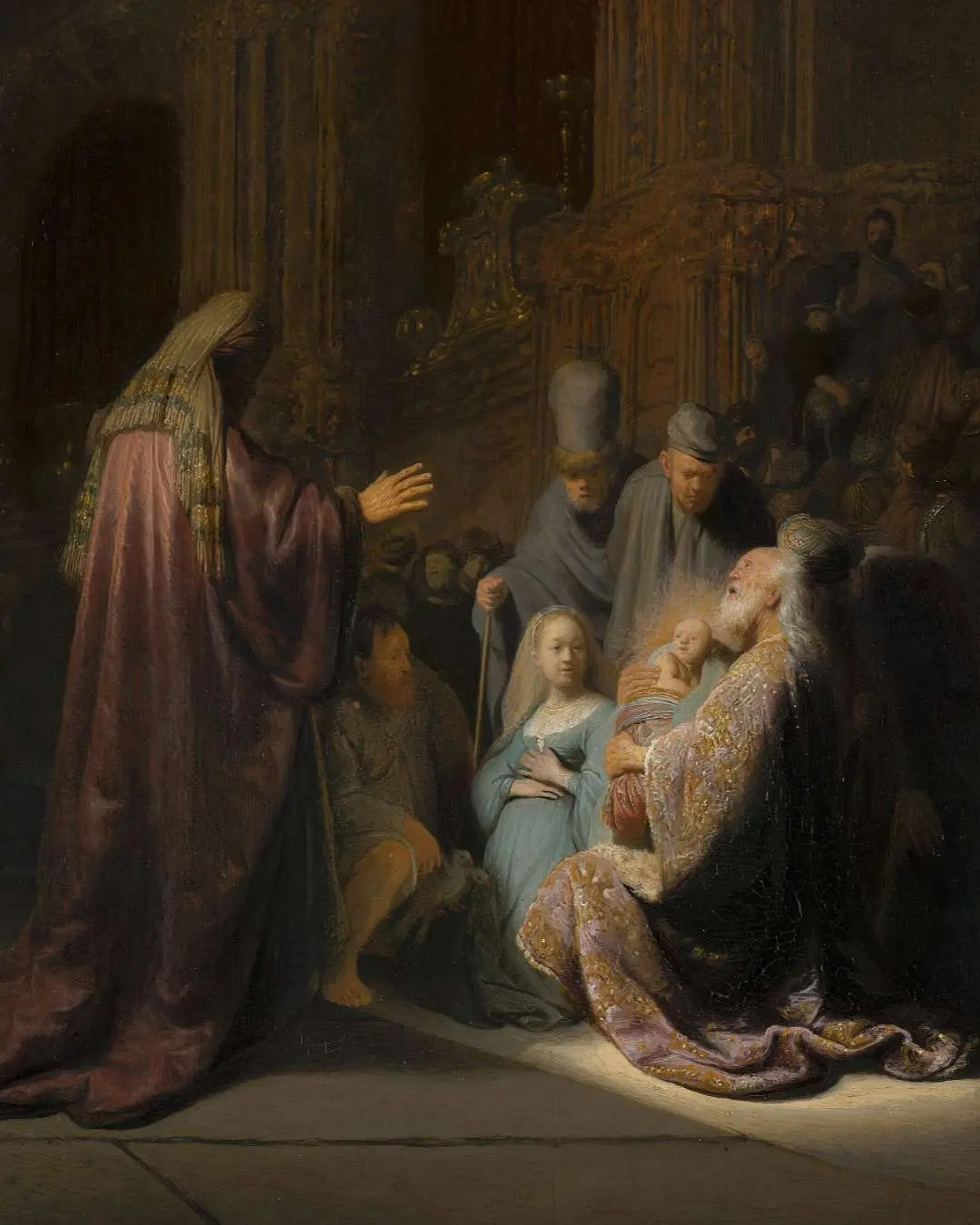
When the days were completed for their purification according to the law of Moses, they took him up to Jerusalem to present him to the Lord, just as it is written in the law of the Lord, "Every male that opens the womb shall be consecrated to the Lord," and to offer the sacrifice of "a pair of turtledoves or two young pigeons," in accordance with the dictate in the law of the Lord. Luke 2:22-24
Mary and Joseph, faithful to the Law of Moses, present the infant Jesus in the Temple. Simeon — who had been promised by the Holy Spirit that he would not see death before seeing the Messiah — takes the child in his arms and blesses God, saying: "Now thou dost dismiss thy servant, O Lord, according to thy word in peace" (Luke 2:29). His prophecy to Mary — "thy own soul a sword shall pierce" — points ahead to Calvary. The fruit is obedience: the readiness to place the whole self at God's disposal, as the Holy Family kept the Law of the Lord.
Why Obedience?
Obedience flows from the Presentation because the mystery is submission to the Law by the very ones who stand above it. Mary and Joseph “carried him to Jerusalem, to present him to the Lord” (Luke 2:22), keeping the precept of Moses though the Child is its author and the Mother is without sin; they bring the two turtledoves appointed for the poor (Leviticus 12:8). The Law did not bind them as it binds sinners, yet they fulfill it completely — obedience not compelled by necessity but offered in freedom. Simeon, taking the child, sings the Nunc Dimittis (Luke 2:29–32), the canticle the Church still prays at Compline every night. It is the disposition the Letter to the Hebrews places at the heart of the Incarnation: “Behold I come... that I should do thy will, O God” (Hebrews 10:7). Aquinas holds that obedience offers God the greatest thing a person possesses — his own will — and so stands first among the moral virtues that subject us to God (ST II–II, Q. 104, a. 3).
Sources: Luke 2:22–24 · Hebrews 10:7 · Nunc Dimittis (Luke 2:29–32, prayed nightly at Compline) · Thomas Aquinas, ST II–II, Q. 104, a. 3
“The Presentation in the Temple not only expresses the joy of the Child’s consecration and the ecstasy of the aged Simeon; it also records the prophecy that Christ will be a ‘sign of contradiction’ for Israel and that a sword will pierce his mother’s heart.” John Paul II, Rosarium Virginis Mariae §20
Sacred site: The Temple Mount, Jerusalem — the Second Temple where the Presentation occurred was destroyed by Rome in 70 AD. The Western Wall remains the closest accessible point to the Temple’s former sanctuary.
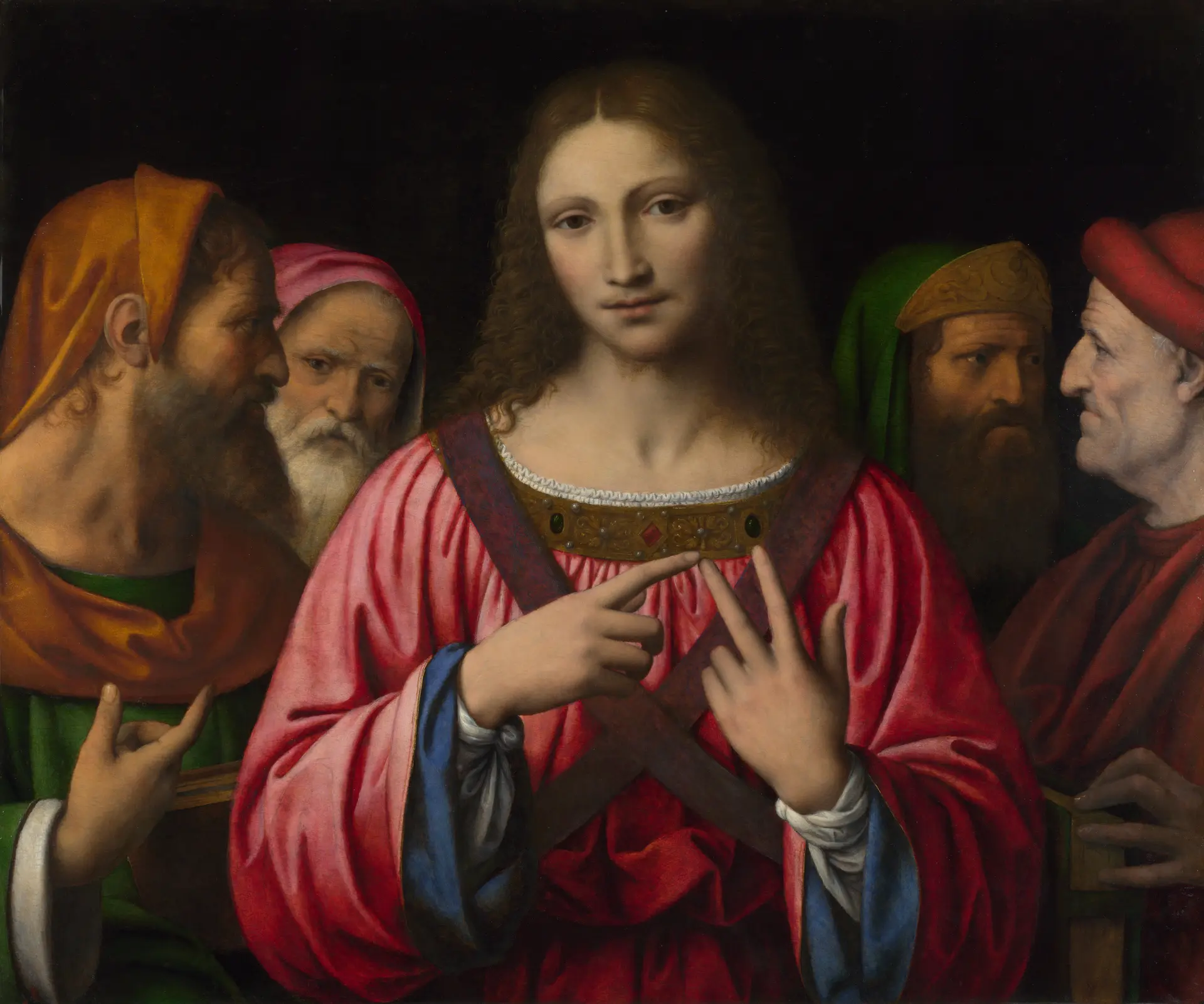
After three days they found him in the temple, sitting in the midst of the teachers, listening to them and asking them questions, and all who heard him were astounded at his understanding and his answers. Luke 2:46-47
After the Feast of Passover, Mary and Joseph lose the twelve-year-old Jesus for three days — a foretaste of the three days in the tomb — and find him in the Temple, teaching the teachers. "How is it that you sought me? did you not know, that I must be about my Father's business?" (Luke 2:49). The three-day episode (lost, then found after three days) has a Paschal shape. The fruit is perseverance: the resolve to seek Christ sorrowing and not stop until he is found, where he is always to be found — about his Father's business, in prayer, in the sacraments.
Why Perseverance?
Perseverance flows from the Finding because the mystery is three days of unrelenting search. Having lost the Child, Mary and Joseph do not resign themselves to the loss but seek him sorrowing until, “after three days, they found him in the temple, sitting in the midst of the doctors” (Luke 2:46). The three days lost and found have a Paschal shape; Augustine saw in them a figure of the three days in the tomb (Quaestiones Evangeliorum II.20), so that the search itself rehearses the Church’s waiting between Cross and Resurrection. Thomas Aquinas treats perseverance as the virtue that holds the will firm in the good against the weariness of long delay — not a single act of courage but the strength to continue to the end (ST II–II, Q. 137, a. 1). The fruit is the resolve to seek Christ and not stop seeking — trusting, as the finding proves, that he is to be found where he has always been, “about my Father’s business” (Luke 2:49).
Sources: Luke 2:46–49 · Augustine, Quaestiones Evangeliorum II.20 · Thomas Aquinas, ST II–II, Q. 137, a. 1
“Joy mixed with drama marks the fifth mystery, the finding of the twelve-year-old Jesus in the Temple. Here he appears in his divine wisdom as he listens and raises questions, already in effect one who ‘teaches’.” John Paul II, Rosarium Virginis Mariae §20
Sacred site: The Temple Mount, Jerusalem — the Court of the Gentiles where the twelve-year-old Jesus sat among the teachers. Location of Christ’s first recorded public teaching.
Live community · Prayer streak · No account needed
What are the Joyful Mysteries and when are they prayed?
Each decade of the Rosary meditates on one Mystery — an event from the lives of Jesus and Mary drawn from Scripture and the tradition of the Church. For each decade: announce the Mystery, pray one Our Father, ten Hail Marys while meditating on the Mystery, then one Glory Be and the Fatima Prayer.
The five Joyful Mysteries are: The Annunciation (Luke 1:26-38), The Visitation (Luke 1:39-56), The Nativity of the Lord (Luke 2:1-20), The Presentation of the Lord (Luke 2:22-38), and The Finding of Jesus in the Temple (Luke 2:41-52). They are traditionally prayed on Mondays and Saturdays.
What day are the Joyful Mysteries prayed?
The Joyful Mysteries are traditionally prayed on Monday and Saturday throughout the year. They also replace the Glorious Mysteries on all Sundays of Advent (the Church's season of waiting for Christ's coming) and during the Christmas season through the Feast of the Baptism of the Lord. This seasonal assignment is governed by John Paul II's Rosarium Virginis Mariae §38 (2002), which confirmed the longstanding Dominican custom. The Joyful Mysteries are also especially fitting on major Marian feasts connected to the Incarnation: the Annunciation (25 March), the Visitation (31 May), and the Nativity of Mary (8 September).
What are the fruits of the Joyful Mysteries?
The fruits (virtues) of the Joyful Mysteries are: The Annunciation — Humility; The Visitation — Love of Neighbor; The Nativity — Detachment; The Presentation — Obedience; The Finding in the Temple — Perseverance.
What scripture passages correspond to the Joyful Mysteries?
All five Joyful Mysteries are rooted primarily in the Gospel of Luke, whose Infancy Narrative is the most detailed of any Gospel: The Annunciation (Luke 1:26–38); The Visitation (Luke 1:39–56, including the Magnificat); The Nativity (Luke 2:1–20, with the shepherds as the first to hear the news); The Presentation in the Temple (Luke 2:22–38, including Simeon's Nunc Dimittis and the prophecy to Mary); The Finding in the Temple (Luke 2:41–52). Matthew 1:18–25 supplements the Annunciation with Joseph's perspective. Luke 2:29–32 (the Nunc Dimittis at the Presentation) is prayed by the Church at Compline every night.
What are all five Joyful Mysteries of the Rosary?
The five Joyful Mysteries are: 1. The Annunciation — the Angel Gabriel announces to Mary that she will conceive the Son of God (Luke 1:26-38). 2. The Visitation — Mary visits her cousin Elizabeth, and John the Baptist leaps in the womb (Luke 1:39-56). 3. The Nativity of the Lord — Jesus is born in Bethlehem and laid in a manger (Luke 2:1-20). 4. The Presentation of the Lord — Mary and Joseph present the infant Jesus in the Temple; Simeon prophesies (Luke 2:22-38). 5. The Finding of Jesus in the Temple — Mary and Joseph find the twelve-year-old Jesus teaching among the doctors (Luke 2:41-52).
What is the spiritual fruit of each Joyful Mystery?
The fruits (virtues) traditionally associated with the Joyful Mysteries are: The Annunciation — Humility; The Visitation — Love of Neighbor; The Nativity — Detachment; The Presentation of the Lord — Obedience; The Finding of Jesus in the Temple — Perseverance.
What is the First Joyful Mystery?
The First Joyful Mystery is the Annunciation — the Angel Gabriel's announcement to the Virgin Mary that she would conceive and bear the Son of God (Luke 1:26-38). The Mystery contemplates Mary's fiat — 'be it done to me according to thy word' — as the moment of the Incarnation, when the eternal Word took flesh in her womb. Its spiritual fruit is humility. It is prayed as the first decade on Monday and Saturday, and on Sundays during Advent and Christmas when the Joyful Mysteries replace the Glorious for the liturgical season.
Why is Humility the fruit of the Annunciation?
Humility is the fruit of the Annunciation because the mystery is structurally the reversal of the Fall. Eve grasped equality with God (Genesis 3:5); Mary received what she did not reach for. Irenaeus of Lyons (Adversus Haereses 3.22.4, c. 180 AD): 'The knot of Eve's disobedience was untied through Mary's obedience.' Augustine adds that the Incarnation itself is the supreme act of divine humility — God emptying himself into a womb (Philippians 2:7; De Sancta Virginitate §31). The virtue we seek in meditating on the Annunciation is the disposition to receive rather than seize — the opening that makes all grace possible.
Why is Love of Neighbor the fruit of the Visitation?
Love of Neighbor is the fruit of the Visitation because Mary's first act after receiving the Word of God within her is to travel in haste (Greek: spoude) to serve her elderly cousin Elizabeth. Aquinas teaches that love of God and love of neighbor are inseparable — not two loves but one love with two objects (ST II-II, Q. 25). The Visitation shows this unity: charity received becomes charity given, without delay. Gift becomes service; grace becomes love of neighbor.
Why is Detachment the fruit of the Nativity?
Detachment is the fruit of the Nativity because the mystery is kenosis made material. Paul writes that Christ 'emptied himself, taking the form of a servant' (Philippians 2:7) — the Nativity is that self-emptying made flesh. The Son of God is born owning nothing, laid in a manger, because there was no room for them in the inn (Luke 2:7). The point is not destitution but freedom: 'being rich he became poor, for your sakes; that through his poverty you might be rich' (2 Corinthians 8:9). Aquinas teaches that poverty removes what stands between the soul and God; the perfection lies in the charity it frees (ST II-II, Q. 186, a. 3). The fruit is the interior liberty to hold the world's goods loosely.
Why is Obedience the fruit of the Presentation?
Obedience is the fruit of the Presentation because the mystery is submission to the Law by the very ones who stand above it. Mary and Joseph carried the infant Jesus to Jerusalem to present him to the Lord (Luke 2:22), keeping the precept of Moses though the Child is its author and the Mother without sin, offering the two turtledoves appointed for the poor (Leviticus 12:8). It is the disposition the Letter to the Hebrews places at the heart of the Incarnation: 'Behold I come... that I should do thy will, O God' (Hebrews 10:7). Aquinas holds that obedience offers God the greatest thing a person has — his own will — and so stands first among the moral virtues that subject us to God (ST II-II, Q. 104, a. 3).
Why is Perseverance the fruit of the Finding in the Temple?
Perseverance is the fruit of the Finding because the mystery is three days of unrelenting search. Mary and Joseph do not resign themselves to the loss but seek the Child sorrowing until, after three days, they find him in the temple among the doctors (Luke 2:46). Augustine saw in the three days lost and found a figure of the three days in the tomb (Quaestiones Evangeliorum II.20). Aquinas treats perseverance as the virtue that holds the will firm in the good against the weariness of long delay — the strength to continue to the end (ST II-II, Q. 137, a. 1). The fruit is the resolve to seek Christ and not stop, trusting he is to be found about his Father's business (Luke 2:49).